
The Human Side of Building a Resilient Business
Every business looks steady from the outside. You see the growth announcements, the bigger teams, the expanding offices. What you rarely see are the revenue drops, the hiring mistakes, the moments when the entire model stops working and leaders have to figure out what comes next.
Resilience came up early in my conversation with JD Ewing, CEO of COE Distributing, and it stayed at the center of everything we discussed. His path reflects something most founders experience but rarely say out loud: growth gets the attention, but survival does the teaching.
That is the reality for most companies, and it is also where the meaningful lessons live. Here are some of my key takeaways from our conversation.
Resilience Is Built in the Hard Moments
Resilience is not a quality you develop during good years. It gets built when demand disappears overnight, when a market shifts faster than your team can adapt, when survival becomes the actual goal. The companies that come through those periods tend to share a few things in common: they stay close to their customers, they communicate honestly with their teams, and they are willing to change direction without clinging to what worked before.
That last part is harder than it sounds. Many founders spend years building one product or service, and when the market changes, changing direction feels like admitting failure. It is not. The companies that treat adaptation as a skill rather than a defeat tend to outlast the ones that treat their original model as sacred. Markets reward relevance, not comfort.
Culture Is Tested, Not Declared
Culture plays a bigger role here than most leaders expect. It is easy to talk about values during good quarters, to put them on the walls and weave them into hiring presentations. The real test is how leadership behaves under pressure.
When things get hard, employees pay attention. They notice whether communication stays clear or goes quiet. They notice whether decisions feel considered or reactive. They notice whether the people at the top stay steady or start pointing fingers. Culture is not what a company says it believes. It is what the company does when things are difficult, and teams have long memories.
This matters more than ever for younger professionals entering the workforce today. Research consistently shows that employees across generations, but especially younger ones, value trust, transparency and genuine leadership over titles and perks. Companies that dismiss this shift tend to discover the cost of it during their hardest stretches, when they need their teams most and find those teams have already checked out.
The Emotional Weight Nobody Talks About
Recovery requires a different mindset, one that can acknowledge what went wrong without being consumed by it. As JD put it, “If you dwell on the worst of the worst you’ll never get better and you’ll never move on.”
That is not denial. It is the kind of discipline that keeps leaders functional when the pressure is highest. And recovery itself is rarely dramatic. It comes from better habits built over time: stronger customer relationships, clearer communication, more disciplined financial management, better hiring.
One additional observation I have is that in testing times like this, reading also helps build resilience. Even in our conversation JD shared about a book — Becoming Your Best: The 12 Principles of Highly Successful Leaders by Steven R. Shallenberger. He credited it with helping him ensure he improved how he put his team front and centre.
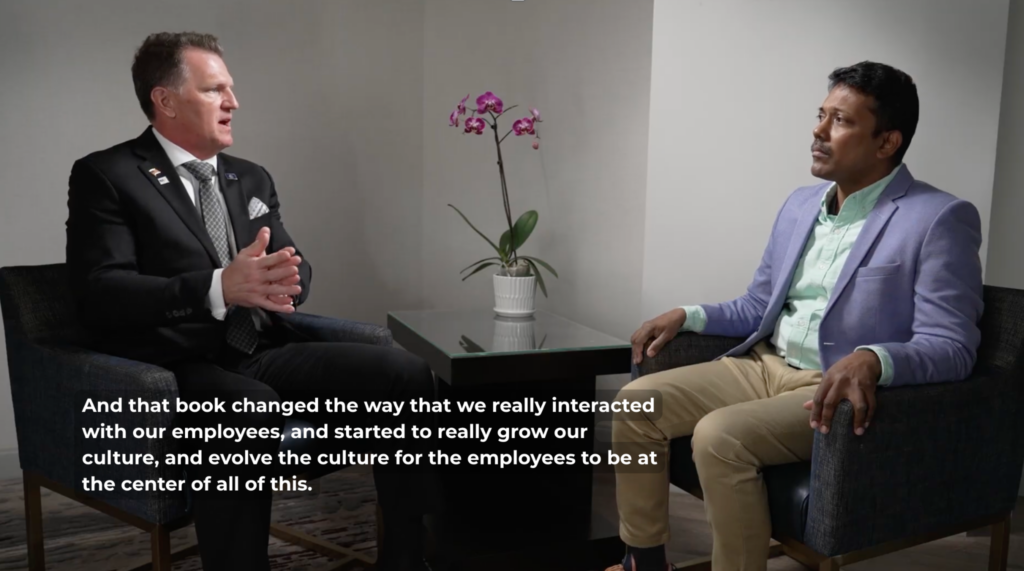
I also appreciated his point of ensuring that the books read within the company offered insights into both personal and professional growth. Even in our team, it was reading that put us back on track and in many ways built resilience for us.
The businesses that endure are not the ones that avoided hard moments. Most of them have been through genuine crises, periods where the outcome was genuinely uncertain. What separated them was not luck or a perfect strategy. It was leadership that chose long-term thinking when short-term panic would have been easier, and teams that trusted each other enough to work through uncertainty together.
That turns out to be the most durable competitive advantage there is.



Leave a Reply