
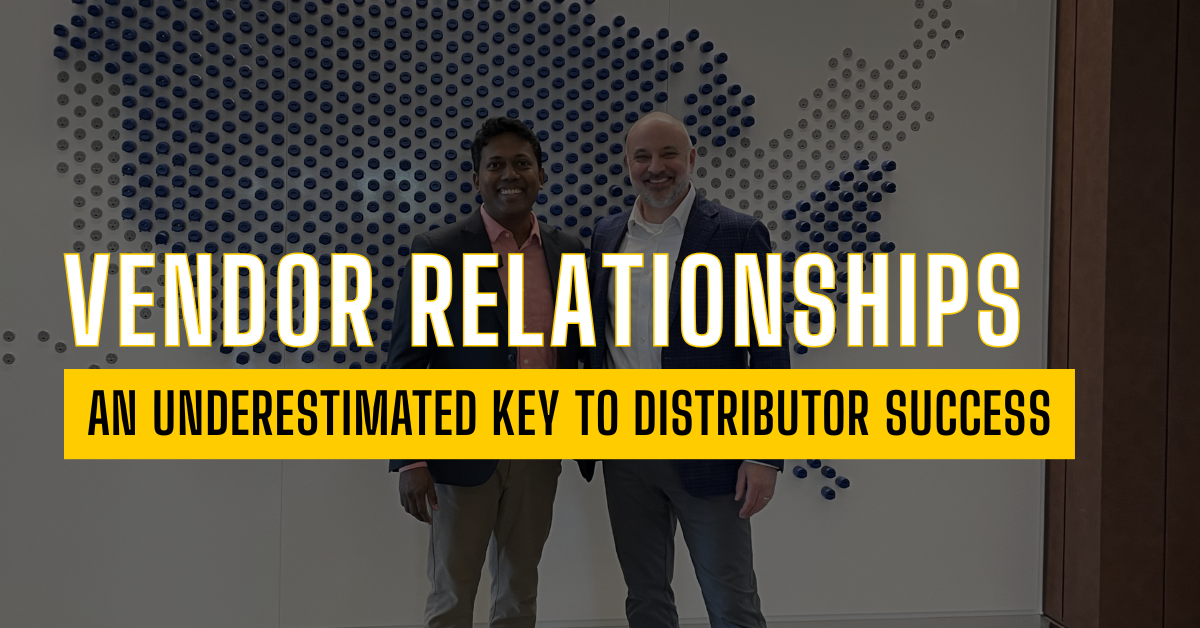
Vendor Relationships: An Underestimated Key To Distributor Success
When we talk about growing a distribution company, the conversation usually centres on customers, technology, and inventory. These things matter. But there is one quality that often gets overlooked: the relationship a company builds with its vendors.
This came into sharp focus in a conversation I had with Jason Seger, CEO of Border States. I had expected him to talk about leadership and technology. Instead, he chose to highlight the company’s relationship with its suppliers.
“We simply can’t do what we intend to do without them,” he said.
More Than Buying Things
The best distribution companies do not see vendors as people they buy from. They see them as partners who help deliver value to customers. Managing vendor relationships goes well beyond securing the best price or signing contracts. Every vendor relationship, handled well or poorly, has a direct impact on the customer and on how the business performs over time.
A standard vendor relationship means the work gets done. A great vendor relationship means having a partner through the entire business journey. That is a long-term investment, and it pays off as the company grows.
Trust and Transparency
Jason spoke about how Border States shares its vision with vendors so they understand where the company is heading. That openness builds trust. And when trust exists, conversations become more productive. Vendors share ideas, problems get solved together, and the relationship moves beyond price negotiation into something more valuable.
Customers feel this difference even if they cannot see it directly. Products arrive on time, inventory is accurate, and questions get answered quickly. These outcomes are the result of distributors and vendors working closely together.
When Things Get Tough
Strong partnerships matter most during difficult times. When supplies are scarce, shipping is delayed, or the economy is uncertain, companies that have invested in vendor relationships are better positioned to handle disruption. They already have the communication, trust, and goodwill in place. Good partnerships do not make problems disappear. They make problems easier to solve.
Technology Enables And People Drive
Technology can support vendor relationships but it cannot replace them. Automated systems and better inventory tools make information sharing easier. But relationships are built by people. Successful companies use technology to strengthen human connection, not substitute for it.
Accountability also matters. A true partnership does not mean lowering expectations. It means having honest conversations, holding each other to high standards, and growing together over time.
Final Thought
The distribution industry has always run on relationships. Markets will grow more competitive, technology will keep changing, and customer expectations will keep rising. But one thing stays constant: businesses grow faster when people trust each other. Great distributors do not succeed alone. They succeed because they build relationships with partners who believe in the same goals.




Leave a Reply