
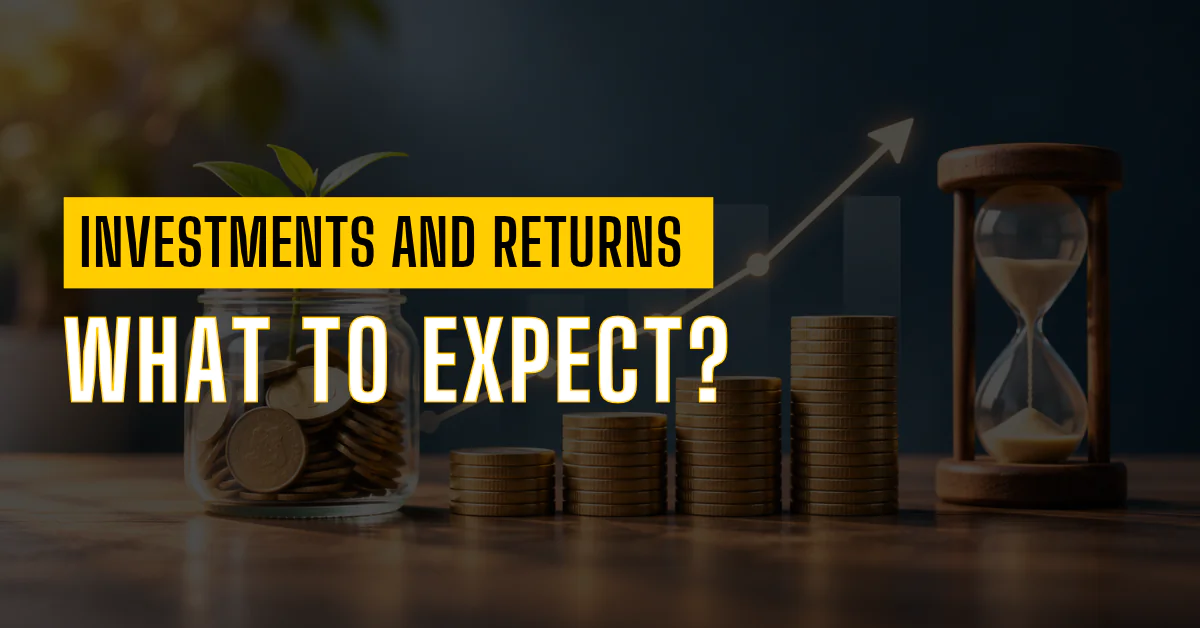
Investments and Returns – What to expect?
Last week, I was chatting with our team about investments. When we hear that word, the first things that come to mind are usually stocks, real estate, gold, or other financial assets. To me, ‘investment’ goes much beyond that. It’s about investing your time, money, energy, health, knowledge, and, most importantly, investments in people.
Invest in yourself
Let’s start with something simple. If you’re working remotely, having a good desk, a comfortable chair, proper lighting, and a dedicated workspace can make a big difference. These things cost money. But what is the value you get out of them?
If you’re spending most of your day attending customer calls, working with teams, or speaking with prospects, the way you present yourself matters.
Similarly, buying a good laptop, investing in a course, reading a book, or listening to a podcast are all ways of investing in yourself.
Not everything needs to give you an immediate financial return. A lot of times, the knowledge and experience you gain are much more valuable.
Don’t shy away from business investments
Every company makes several investments to improve their business. Some of these investments are expensive. But we cannot always look at an immediate return. For example, if you’re spending $10,000 on something, ask yourself two questions:
What is the outcome I can expect?
What’s the worst thing that can happen?
The worst-case scenario might be that you lose the entire $10,000 without getting the expected return. Are you prepared for that? When you are in a position of strength, it is much easier to make these investments.
Invest in people
One thing that came up during our discussion was investing in people. I strongly believe this is one of the most important investments we can make.
Spend time with people who know more than you. Work with people who challenge your thinking. Bring in experts when you don’t have the answers yourself. You don’t have to figure out everything on your own.
Of course, investing in people doesn’t always mean expecting something in return. Sometimes, you help someone simply because they need help. Don’t turn every relationship into a transaction. Do good work, be generous, and don’t expect something in return for the help you do.
You don’t have to get everything right
One interesting question that came up during our discussion was about choosing between different investments.
Imagine you want a better laptop, a good desk, and a comfortable chair. But you don’t have enough savings to buy everything. What would you do?
This is where capital allocation comes in.
It’s not just about allocating money. Your time is also capital. You need to decide where to invest both.
You cannot have everything today. Sometimes, you need to practise delayed gratification. Instead of buying an expensive desk, start with something affordable. Instead of waiting for a powerful laptop to create 4K videos, start with 720p.
The important thing is to start. You can always improve along the way.
Starting imperfectly is better than never starting at all
I think one of the biggest mistakes we make is allowing a fear of not getting things perfect preventing you from even taking that critical first step.
Obviously, we want the best equipment, the best people, the best setup, and the best possible outcome. But no one makes the right choice every time. You need to experiment. Some things will work, and some won’t. That’s part of the process.
Do your research, speak with people who have experience, and make a decision. Writing these down definitely helps.
Most importantly, don’t compare your journey with someone else’s. What you see today is the result of years of work, investments and even failures that you may not know about.
Look at where you want to be five years from now, not just where you are today.
Investments compound over time. Small improvements, consistent learning, better decisions, and the right people can make a significant difference. And above everything else, invest in your health. Without that, everything else becomes difficult.
At the end of the day, investment is not about spending more money. It’s about making thoughtful decisions about where your resources and time can create the most value.
Don’t be afraid to invest. Don’t be afraid to experiment. And don’t wait for everything to be perfect before you start.
Let’s invest. Where are you investing?
Thank you for reading
Karthik Chidambaram



Leave a Reply