
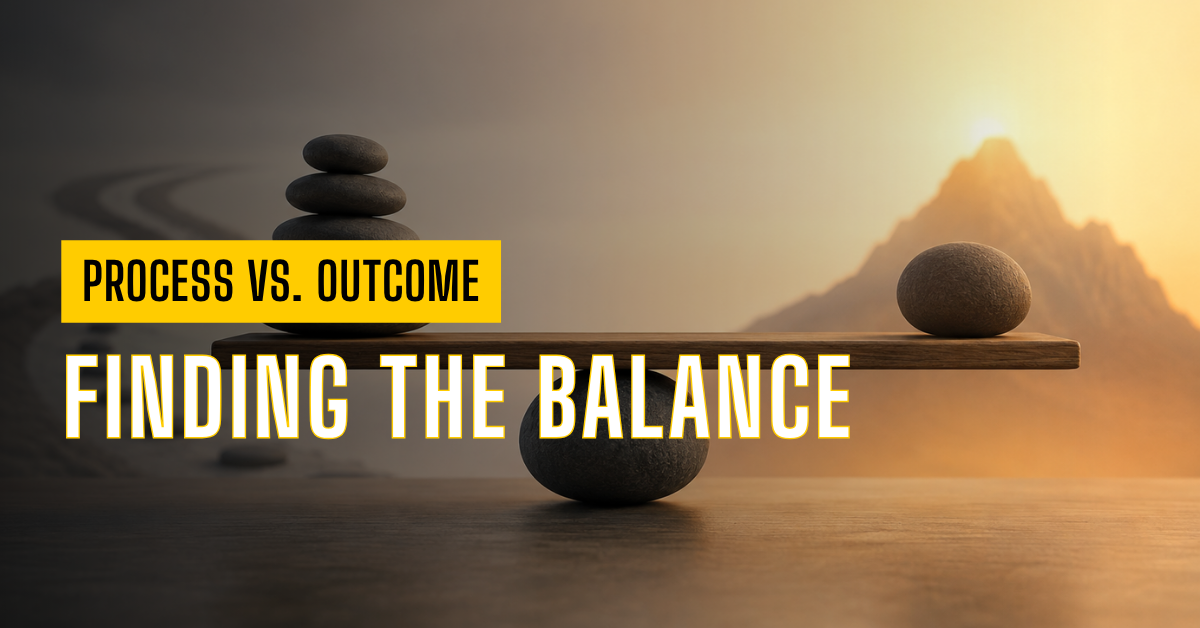
Process vs. Outcome: Finding the Balance
In an earlier post, I wrote about Coach Nick Saban, who built one of the most successful programs in college football history by drilling one idea into his players: focus on the process, not the outcome. Saban distinguishes between transactional leaders, who chase outcomes, and transformational leaders, who build systems and habits: the process. Outcome focus creates anxiety, and anxiety kills performance. When you play golf, play the shot in front of you, not the scoreboard in your head.
I carried this idea into a conversation with Jason Seger, CEO of Border States. I asked him directly: process or outcomes? He agreed with the process-first philosophy but added an important caveat. You still need metrics. Not as a scoreboard to obsess over, but as an instrument: a way to know whether your process is actually working. Without metrics, “trust the process” can quietly become an excuse for complacency.
A few thoughts this raises:
- Metrics should measure the process, not just the result: A sales team obsessing over quarterly revenue is outcome-focused. A sales team tracking calls made, follow-up speed, and pipeline quality is measuring the process and the revenue tends to follow.
- Short feedback loops matter more than final scores: “Next play” mentality works because it shrinks the feedback loop to something actionable right now. Metrics should do the same daily or weekly signals, not just annual results.
- Outcomes are lagging indicators; process metrics are leading ones: Waiting for the outcome to tell you something is wrong means the damage is already done. Good process metrics give you a warning system before that happens.
- Metrics keep discipline visible: Sticking to a process day after day doesn’t always feel like progress. Tracking the right numbers gives people proof that the discipline is paying off, which is often what keeps a team pushing and motivated.
So maybe the real leadership skill isn’t choosing process over outcomes, it’s building a process rigorous enough to sustain you long-term, and monitoring it well enough to know that it’s working.
Thank you for reading.
Karthik Chidambaram.



Leave a Reply