
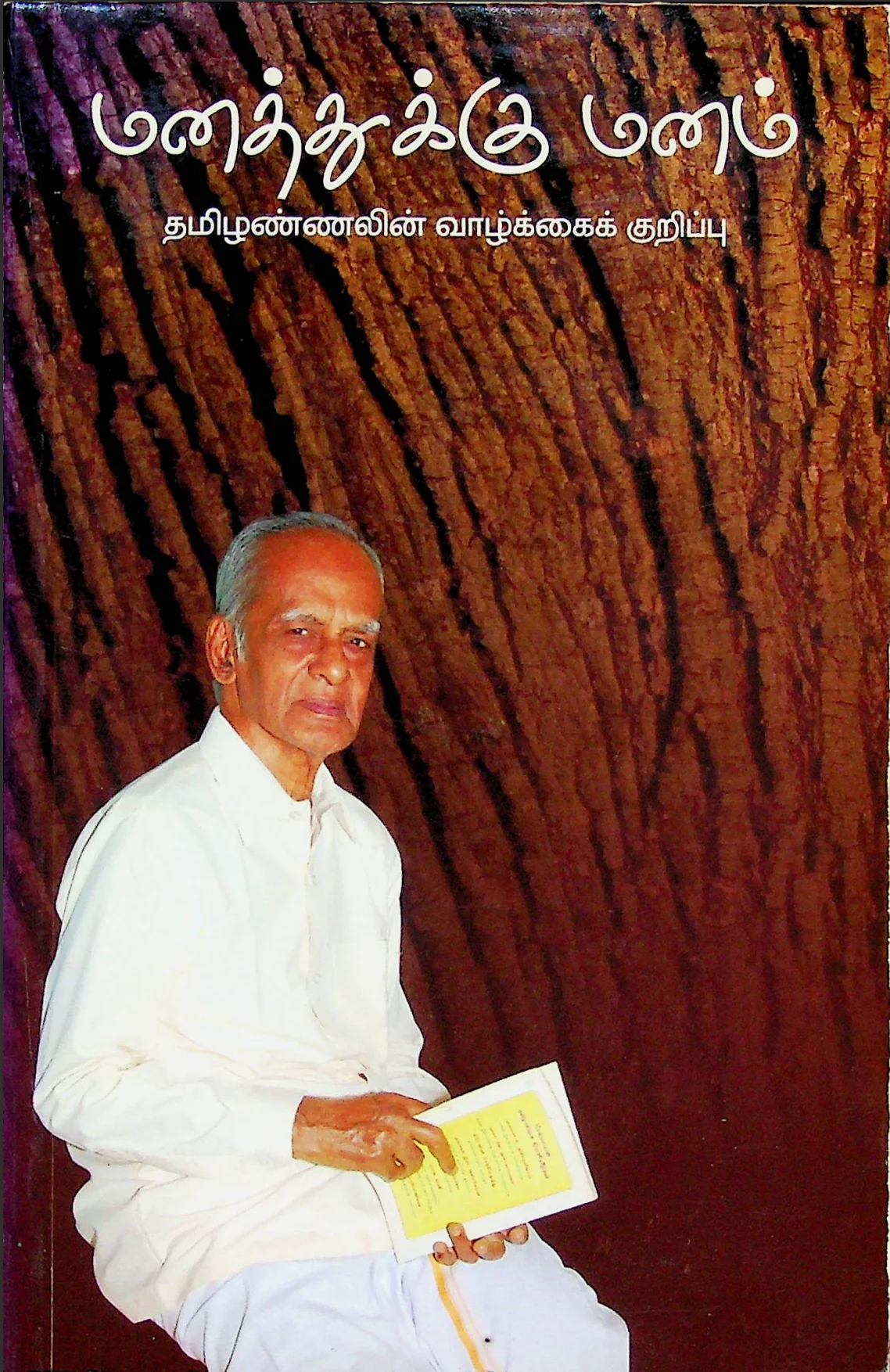
Tamilannal – Biography
I recently read the biography of Tamilannal (Rama. Periyakaruppan, August 12, 1928 – December 29, 2015), மனத்துக்கு மனம். It’s not just the body that needs care, but the mind too, and Tamilannal asks us to tune our minds so that we stay healthy. Biographies like this take you back in time. I never met him or had the chance to, but after reading his book, I felt as though I knew him well, as if I had conversed with him through its pages.
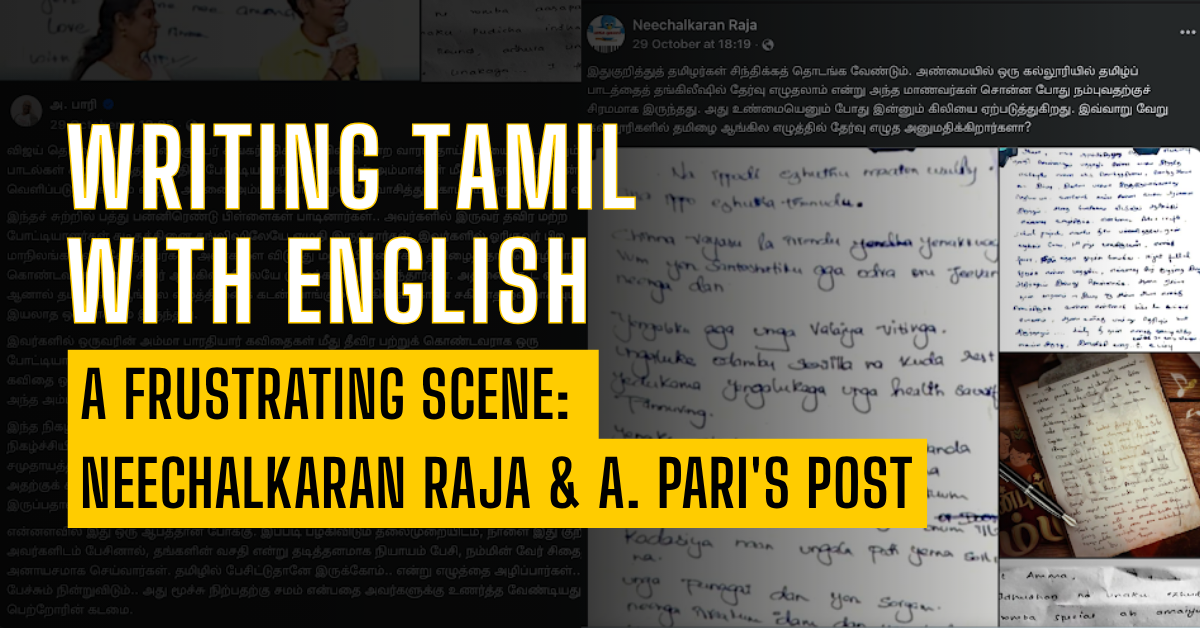
One thing I found very interesting is that the decline in reading and writing Tamil isn’t something that happened only in the last 20 or 30 years. It has been going on for the last 50 years. He wrote numerous essays on this topic, and some of them are included in the book. This subject deeply concerns me, and I’m glad I got the chance to read his perspective.
He takes us back to the 1960s, when the anti-Hindi agitation helped bring the Dravidian movement to power. In many ways, English became a substitute for Hindi. In India, much of what we do is governed by bureaucrats, and he writes about the role they played at the time: the rule said the second language students had to learn must be a regional language, but Tamil was cleverly never specified in writing. Tamilannal also writes about the rise of matriculation schools and how difficult it became to instill Tamil in children. Unfortunately, he notes, Anna had the intention but couldn’t do much. My reading of his writing is that those who came after Anna, in many ways, made things worse and failed to fix the problem. He says it will take a cultural revolution to set it right.
The problem I see today, with most people unable to read or write Tamil well, is that there is no overall vision. As a society, we don’t seem to believe that our language can lead to a prosperous and healthy society, so we lean into English. I’m not saying English isn’t necessary, but our mother tongue is equally, if not more, important. It supports our mental well-being. This is exactly what Tamilannal writes as well. He says many people don’t fully trust Tamil; they are half here and half there, like someone trying to leap across a well and stopping halfway.
I really enjoyed reading the book, and it gave me perspective on the 50s, 60s, 70s and beyond. His interactions with seven leaders and writers, including Poet Mudiarasan, Thiyagarajar, Students Xerox Arunachalam and several others, were a treat to read.
Exercise helps our physical well-being, but mental health shapes our overall well-being, so the two need to go hand in hand. The title of the book, மனத்துக்கு மனம் (From Heart to Heart, or Mind to Mind), feels very apt, because both reading and research show that language plays a critical role in mental well-being. Unfortunately, as a society, we are failing to understand this.
Chapter 9, தமிழ் வழிக் கல்வி, தமிழ் இயக்கப் பணிகள் (Tamil-Medium Education and the Tamil Language Movement), is a great read if you’re interested in learning more about his work in this area, and also in understanding a bit of the history behind the decline in Tamil reading and writing.
Recently, during my tennis class, I was talking to a 10th grader who told me she doesn’t even need to learn a second language, since it isn’t part of her curriculum (she’s on the IGCSE board). It really broke my heart.
Thank you, Tamilannal, for documenting and publishing this work. It truly helps us as a society.


Leave a Reply