
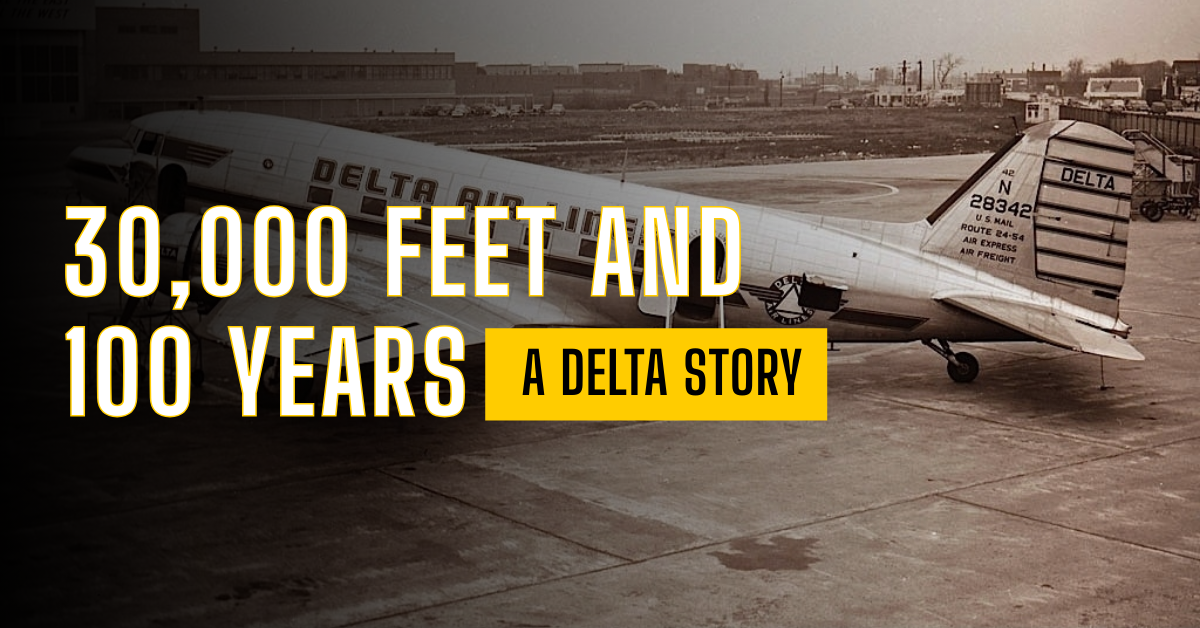
30,000 Feet and 100 Years: A Delta Story
I was flying from Austin to Atlanta the weekend before last. Delta had the only viable non-stop option, and with Atlanta being a massive hub of theirs, the choice was easy. Two hours in the air. Just enough time to find something to watch.
And I found “A Century of Flight,” a Delta documentary.
I thought, why not? I’m on Delta. Let’s see what they have to say.
I did not know that Delta was 100+ years old. That alone hooked me. What unfolded wasn’t just corporate history. It was a masterclass in survival.
The Early Days
Delta started in 1925 as Huff Daland Dusters, the world’s first aerial crop-dusting company.The principal founder, C.E. Woolman joined in 1925 and saw something bigger. By 1928, he and local banker Travis Oliver bought the company’s assets. A woman named Catherine FitzGerald suggested the name “Delta” , a nod to the Mississippi Delta region where they operated.
Passenger service began in 1929. Then the Great Depression hit, and they had to suspend flights. They survived by going back to crop dusting, running flight schools, repairing aircraft, whatever it took.
That’s where the grit started.
The Hard Chapters
The documentary walked through the moments that could have ended it all.
9/11: A day when the nation stood still, and its subsequent impact on the aviation industry.
Bankruptcy in 2005: Rising fuel costs, fierce competition from budget carriers. Delta filed for Chapter 11 bankruptcy with $23.8 billion in debt.
A hostile takeover attempt by US Airways: In 2006, while Delta was still in bankruptcy, US Airways swooped in with a $10 billion bid to absorb them. Employees launched the “Keep Delta My Delta” campaign to fight it off.
At the helm during this chaos? Jerry Grinstein, a former railroad CEO and lawyer who became Delta’s CEO in 2004 at age 71. He took a modest salary of $450,000 with no bonuses. Delta slashed costs, restructured debt, and rallied employees around a shared mission: to save the airline.
When Delta emerged from bankruptcy in 2007, Grinstein turned down his stock grants and used them to create a scholarship fund and hardship fund for Delta employees which became the Delta Care Fund (a fund to care for employees in need/emergency).
Moments That Stayed With Me
The profit-sharing payout on February 14, 2020: Delta handed out $1.6 billion to employees on Valentine’s Day. Then COVID hit weeks later, and everything collapsed again.
“The Spirit of Delta”: In 1982, during another financial crisis, three flight attendants — Diane Carvelli, Virginia “Ginny” Oxford and Jean Owens — led a campaign where employees donated from their paychecks to buy Delta’s first Boeing 767. They raised $30 million. That plane was dubbed ‘The Spirit of Delta’ and became a symbol of what happens when people believe in something together.
The Delta Care Fund: Born from Grinstein’s refusal to cash in on his own success. Still helping employees today.
Business is Never a Straight Line
It’s not exponential growth on a slide deck. It’s bankruptcy courts and hostile takeovers and pandemics and fuel crises and employees sleeping on airport floors after tech outages.
What separates companies that last from those that don’t isn’t avoiding the hard stuff—it’s how they move through it.
Delta came back from crop dusting. From the Depression. From 9/11. From bankruptcy. From a takeover bid. From COVID.
That takes serious grit. And it takes people—founders like C.E. Woolman who saw possibility in a struggling crop-dusting service, leaders like Jerry Grinstein who put employees first even when Wall Street wanted something else, and thousands of workers who believed enough to keep going.
So thanks, Delta. Not just for getting me from Austin to Atlanta, but for the reminder that resilience isn’t just about surviving the storm. It’s about what you build on the other side of it.
Time well spent at 30,000 feet.
Karthik Chidambaram.





Leave a Reply